
Criminal Court Cases in Atascosa County
Atascosa County divides criminal court work by offense level. The 81st and 218th Judicial District Courts hear felonies, and the District Clerk keeps those files at 1 Courthouse Circle Drive, Suite 4-B, Jourdanton. The clerk can be reached at 830-769-3011. Electronic filing is mandatory in civil and criminal cases, but that rule governs filing by parties and does not mean every public document is visible online.
The Atascosa County Court at Law hears Class A and B misdemeanors at 1405 Campbell Avenue, Suite 104. Its phone is 830-769-4232, and records also route through the County Clerk. Fine-only Class C charges and local ordinance matters stay with a justice or municipal court. A searcher should use the issuing court shown on a citation or notice instead of assuming the county index holds all Atascosa County criminal cases.
The district courts' official site shows how the two courts share service across the area.
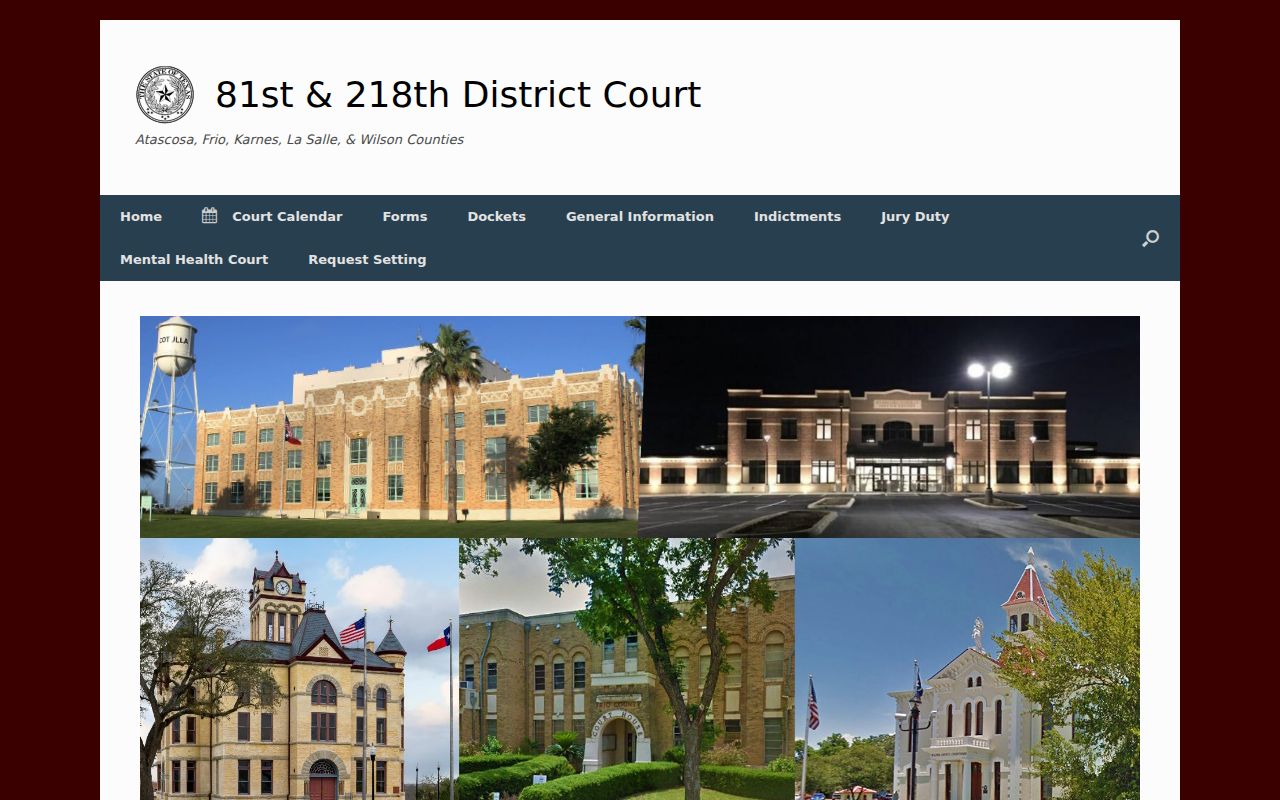
That court assignment is the first fact to confirm before reading a calendar or asking the District Clerk for a judgment.
Three Atascosa County Court Levels
A booking charge does not decide where the final case will sit. A felony complaint may proceed to a grand jury and then a district court indictment. An eligible misdemeanor usually proceeds by information in the County Court at Law. A fine-only charge may never enter either file set. This is why one name search can miss a valid case when the wrong office or record type is selected.
The County Court at Law page identifies the local misdemeanor court and its public contact channel.
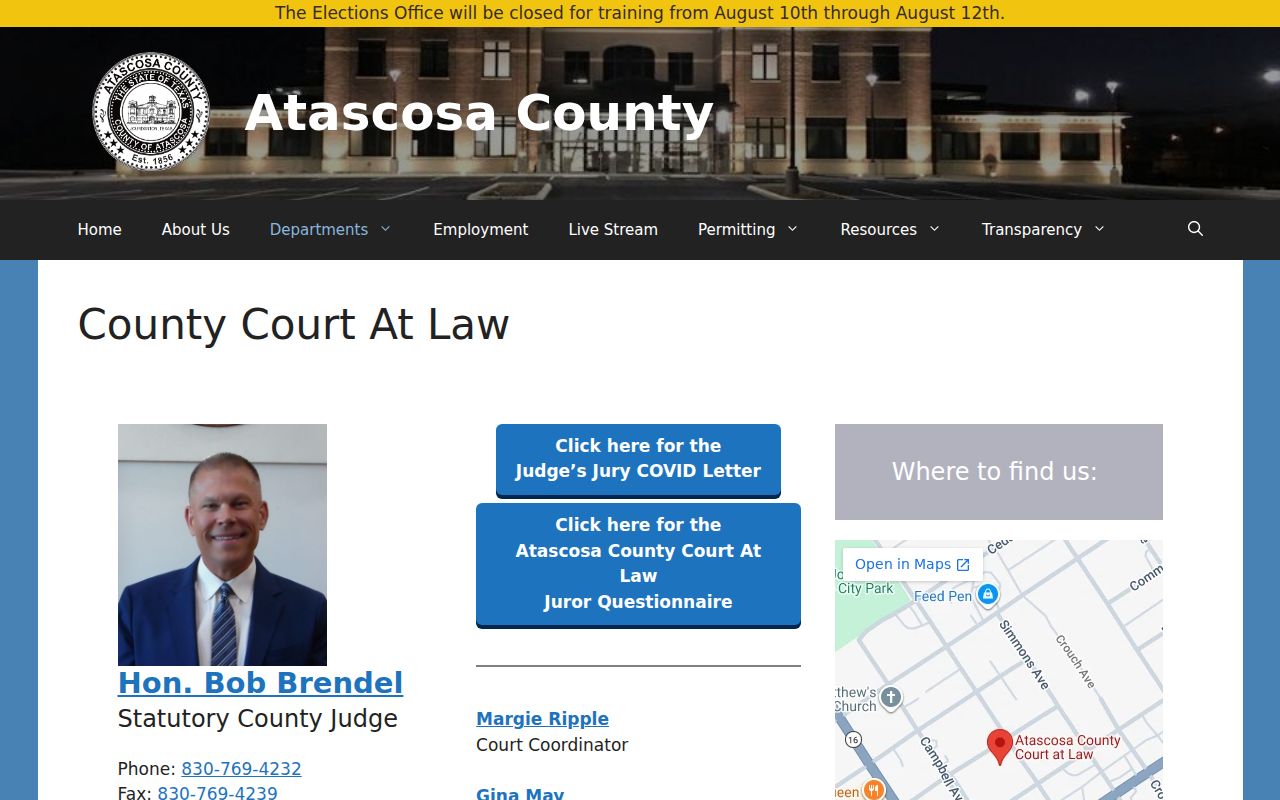
Use its calendar as a setting aid, then obtain the docket or judgment from the record custodian when the outcome matters.
Atascosa County Case Record Searches
Texas does not offer one complete public search for trial-level criminal matters. Atascosa County instead links its LGS Online Records Search from the District Clerk and County Clerk pages. Guest access exposes index details and available image previews. Registration is needed to buy images, and the county instructions say a user may purchase five court or property images before a subscription prompt appears. An old file or an image absent from the index should go to the correct clerk counter.
- Open the official District Clerk or County Clerk page and follow its Online Records Search link.
- Select District Clerk and Criminal for a felony, or the County Clerk criminal collection for a misdemeanor.
- Enter the known name or other criterion. A case number is best when one appears on a court notice.
- Use More Information to read the index and Images to check public previews. Review the docket through the last entry.
- Ask the correct clerk for a missing, older, plain, or certified copy. State the case number and exact document needed.
| Field Label | Type | Required | Notes |
|---|---|---|---|
| Office | Selection | Yes | Choose District Clerk, County Clerk, or another participating office. |
| Record Type | Selection | Yes | Choose Criminal for the relevant office. |
| Last Name or Criterion | Text | Not specified | Available criteria vary by record type. |
| More Information | Result action | No | Opens case or index detail when available. |
| Images / Add to Cart | Result action | No | Previews and purchases available public images after registration. |
Missing Atascosa County Case Images
An index hit and an image are not the same level of access. More Information may show that an Atascosa County case exists even when no scanned filing is offered. The record may be old, not digitized, withheld from the remote view, or stored under another participating office. Do not treat an empty image tab as proof that there is no judgment.
The District Clerk page is the official route for felony records and explains local online access.
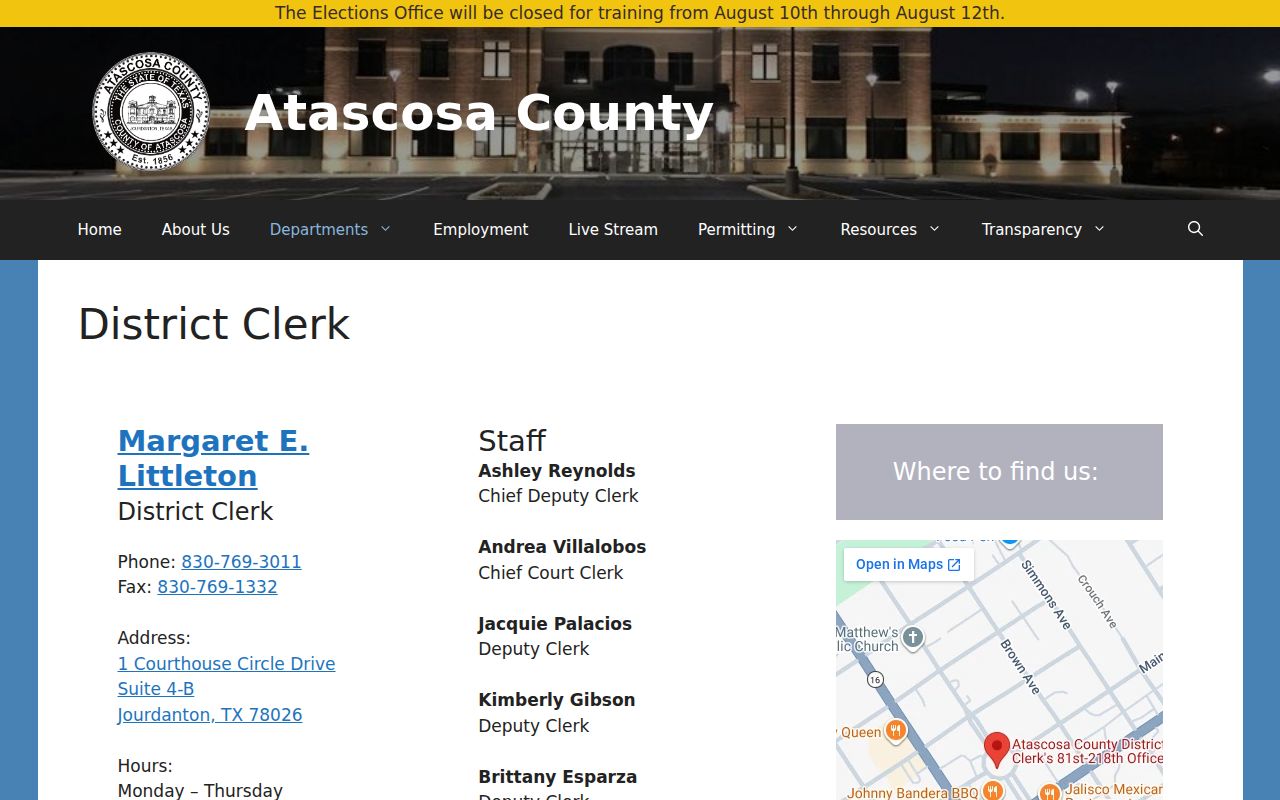
For a missing item, give the clerk the case number, court, party name, and document type, such as indictment, dismissal, judgment, or sentence.
What a Criminal Case File Contains
An Atascosa County court file tracks the filed prosecution, not just the event that led to arrest. It can show the charging instrument, hearings, pleas, orders, judgment, costs, and sentence. The final docket entries matter because prosecutors can reject, amend, or replace the intake charge. Public copies may omit Social Security numbers, financial identifiers, protected victim or minor data, and material restricted by an expunction or nondisclosure order.
| Case Number & Court | Identifies the file and the court that controls it. |
|---|---|
| Charging Document | A complaint, information, or indictment states the filed allegation. |
| Docket Entries | The running register lists filings, settings, pleas, and orders. |
| Hearing Dates | Settings show scheduled events, not necessarily completed outcomes. |
| Disposition & Judgment | Shows dismissal, acquittal, conviction, deferred adjudication, or pending status. |
| Sentence & Conditions | Records the court-imposed term, costs, restitution, or community supervision. |
Atascosa County Calendars Need Context
A weekly CRA docket or Court at Law calendar shows that a matter was set. It does not prove that the hearing occurred, that a plea was entered, or that the case ended that day. Settings move, cases are reset, and later docket entries can change what an earlier calendar seems to imply. Read a calendar as a locator for the court and date, then read the case register and final judgment.
The official Atascosa County Court at Law calendar provides the public scheduling layer.
That distinction prevents a scheduled plea, trial, or status hearing from being mistaken for the actual disposition.
Criminal Case Stages in Atascosa County
After arrest, a magistrate gives the required warnings without unnecessary delay, generally no later than 48 hours under Texas procedure. The prosecutor then reviews the allegation. A felony may move through a grand jury indictment, while an eligible misdemeanor proceeds by information. Arraignment records the plea. Discovery, motions, and pretrial settings follow. A negotiated plea or trial leads to judgment and sentence, though a dismissal, acquittal, no-bill, or deferred adjudication may change that path.
Case flow: Charges Filed › Arraignment › Pretrial › Plea or Trial › Disposition › Sentencing
Each stage creates a different entry. The most recent signed order and the final docket line carry more weight than an early complaint. Readers tracing the custody event before filing can compare it with the county arrest search channels.
Atascosa County Charges Can Change
The intake charge is an arresting agency's initial description. Prosecutors may reject it, reduce it, add another count, or present a different felony theory to the grand jury. An indictment is an accusation, not proof of guilt. Deferred adjudication postpones a finding while the person completes supervision, and Texas includes reported deferred adjudications in its public DPS product even though the result is not a conventional conviction.
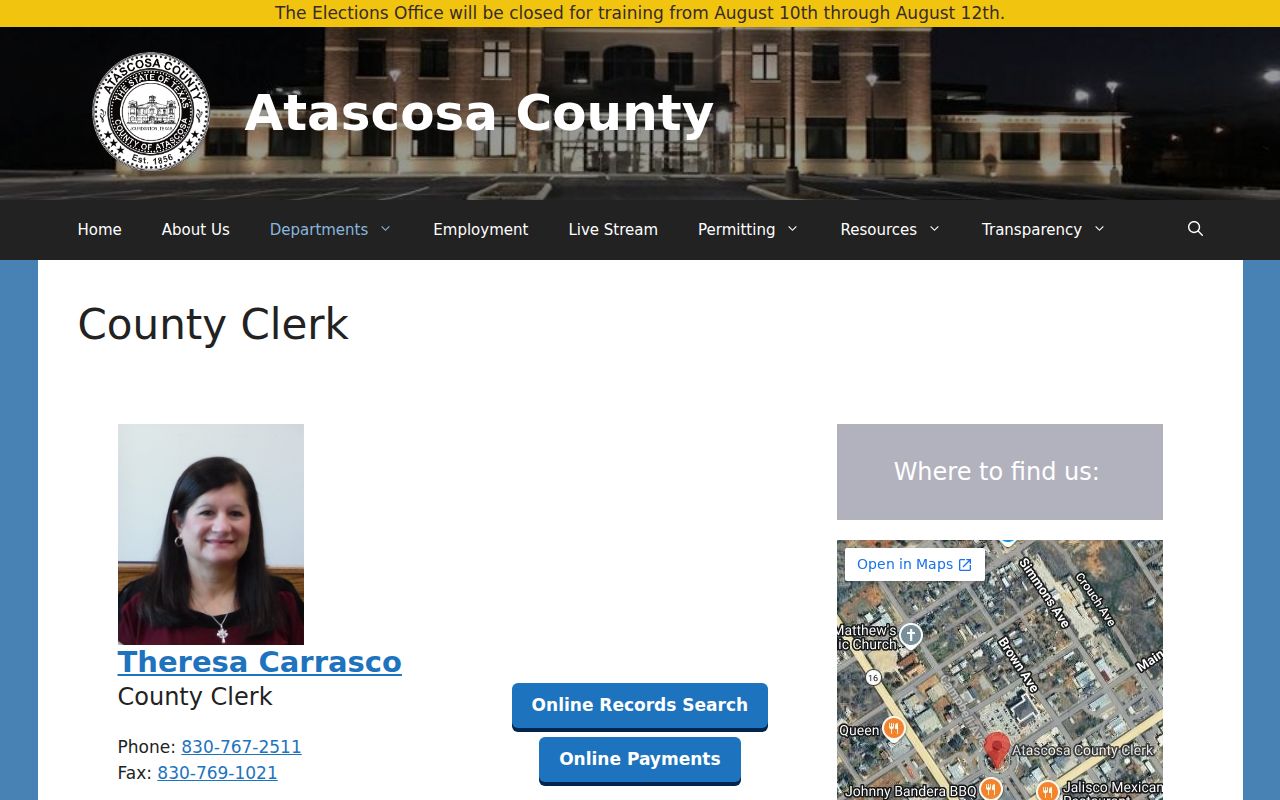
The Atascosa County Clerk page routes misdemeanor record access and the local online search.
Compare the charging paper with the judgment rather than copying the first charge label from a booking record.
Older Atascosa County Criminal Minutes
Historical research needs a clerk fallback. The Texas State Library microfilm inventory warns that some early Atascosa County district-court criminal minute volumes were not filmed. A blank online search or missing microfilm span therefore does not prove that no old proceeding took place. Give the District Clerk a narrow date range, known name, court, and likely record type. Ask whether the original minute book, docket, or another archival form survives.
Older records may use terms such as information, indictment, no-bill, capias, or recognizance. An information is a prosecutor's charging instrument. An indictment is a grand-jury felony accusation. A no-bill means the grand jury declined to indict. A capias commands arrest, while recognizance permits release on a promise rather than a cash deposit. Reading those words in context helps distinguish a charge, court order, and outcome.
Access Rules for Case Records
Ask the office that holds the record. Court case documents go to the clerk, while sheriff incident reports use the Texas Public Information Act route. Texas court guidance distinguishes adjudicative case files from judicial administrative records. Rule of Judicial Administration 12 governs the latter, not the ordinary criminal docket. Texas has no single complete public trial-court criminal search, so an absent statewide result cannot settle whether an Atascosa County case exists.
Juvenile material, protected victim information, identifiers, and sealed or expunged records may be withheld or redacted. Nondisclosure restricts public dissemination but does not destroy every record or block all authorized access. If an online search fails, ask the clerk whether the file is older, stored off system, restricted, or indexed under a different court. Request an existing document, not legal research or a newly made compilation.
The Texas Judicial Branch court records explanation confirms the need to contact the proper local clerk.
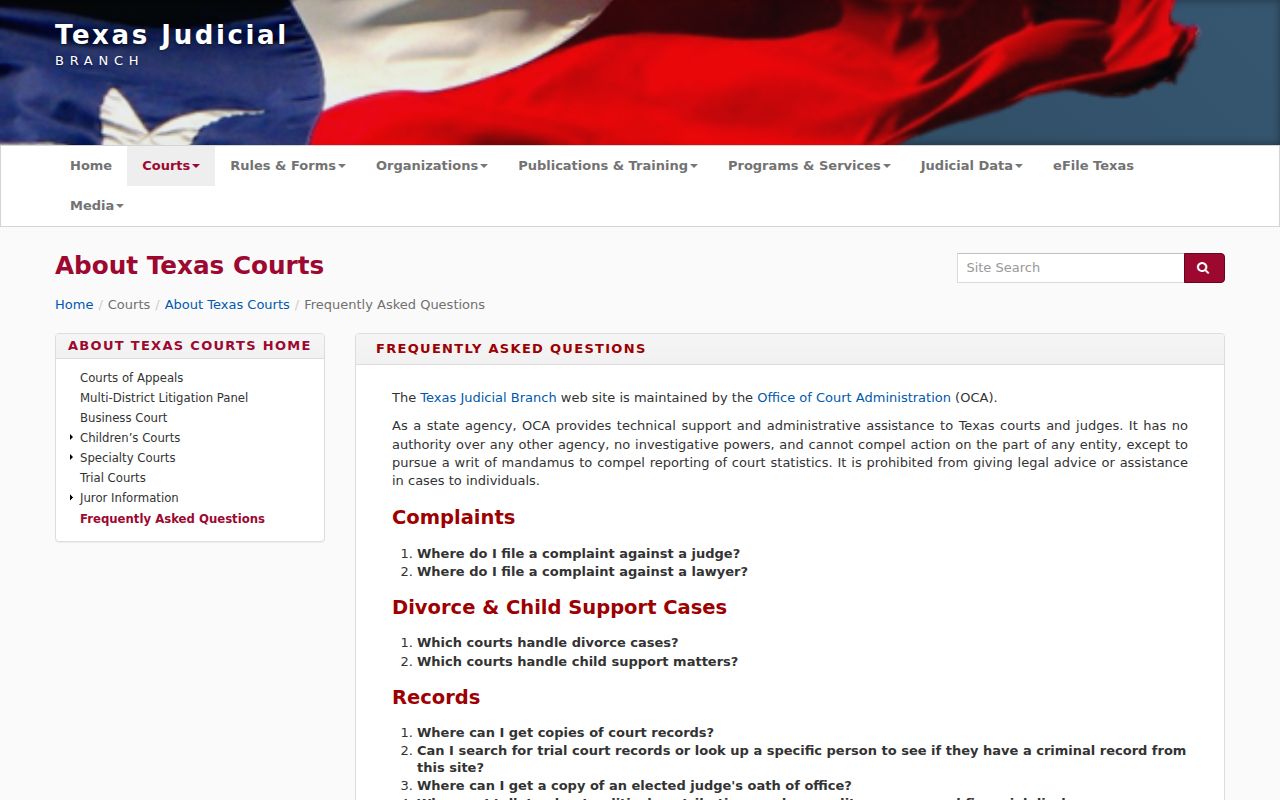
That local-first rule is vital for municipal, justice, County Court at Law, and district files that sit in separate systems.