
Pleasanton Criminal History Checks
Start with the office that made the record. A Pleasanton police report stays with the city even when the person named in it was booked by Atascosa County. A fine-only charge can remain in Pleasanton Municipal Court. Class A or B misdemeanors move to the County Court at Law, while felonies go to one of the district courts. Texas DPS supplies a different statewide view of reported public convictions and deferred adjudications. That split makes a source-by-source search more sound than relying on a single name result.
- Search or submit a focused request through Pleasanton's official NextRequest public-records portal.
- Ask Pleasanton Police Department for the incident or arrest report, with a date, case number, and names when known.
- Check Pleasanton Municipal Court for a city ordinance, traffic, or Class C citation.
- Call Atascosa County booking staff and use the proper county clerk search for custody and higher-level charges.
- Use the Texas DPS name search for the public statewide conviction and deferred-adjudication slice.
For an unclear result, compare the city report with the final court judgment. The original arrest charge may be changed, rejected, or replaced by prosecutors. A fingerprint-based personal review through Texas FAST and IdentoGO is the conclusive state identity route for someone reviewing their own record.
Pleasanton Police Records Portal
Pleasanton has the strongest city-level online request channel among Atascosa County's three largest cities. The official Pleasanton NextRequest portal is the first practical stop for an existing city record. Describe the record rather than asking staff to conduct research. Include a useful date range, report or incident number, involved names, and whether an electronic copy or inspection is sought.
The portal screen can help a requester understand where the city receives public-record demands. The source is shown in this image from the official request system.

That online channel is for city-held records. It does not replace the Sheriff for a county jail record or the District Clerk for a felony judgment. If staff cannot locate the item, confirm that the request named the correct city department and then move to the next holder in the record chain.
Records at Pleasanton Police
Pleasanton Police Department is at 704 W Oaklawn Road, Pleasanton, Texas 78064, and lists 830-569-3869. Because official materials advise confirming the current counter address and hours, call before a walk-in visit. The department's Records Manager contact is ERodriguez@pleasantontx.gov. The District Clerk's expunction-service list also publishes jharen@pleasantontx.gov and erodriguez@pleasantontx.gov for police service routing.
The official Pleasanton police contact page shows the department's current contact structure.

Use the police channel for Pleasanton incident and arrest reports. The request should be narrow enough for staff to identify an existing file. Ask whether protected material will be redacted and request the separable public portion if an active investigation, juvenile data, victim information, or personal identifiers prevent release of the full report.
Pleasanton Police Forms and Requests
Online forms can look like a complete record search when they are only a starting point. Pleasanton's official police materials distinguish department contacts and forms from the county court index. The police forms page is therefore useful for current city procedure, but a form submitted there cannot reveal a later county disposition by itself.

After submitting a request, keep the wording and any confirmation number. If the response only contains the police narrative, search the corresponding clerk file for filed charges and the outcome. Texas Government Code Section 552.221 calls for prompt production, but the ten-business-day rule often quoted under the Public Information Act is generally the deadline for an agency to seek an Attorney General ruling, not a promise that every request will be filled in ten days.
Booking and Arrest Records in Pleasanton
Pleasanton has no verified public city arrest database or official police app. When Pleasanton officers make an arrest, the incident record remains at the police department, but booking normally occurs at Atascosa County Jail in Jourdanton. Call the Sheriff's main number, 830-769-3434, and use booking extension 2231 for current inmate information or jail-records extension 2239 for a booking file or local background check. Reports extensions 2243 and 2229 address Sheriff-generated incident records, not the separate Pleasanton PD report.
This distinction prevents a common error. A police report states the event and probable cause as recorded by the officer. A jail entry focuses on intake time, booking number, charge at intake, bond, housing, and release. Neither proves guilt. The final filed charge and outcome belong in the court file. A reader tracking the later proceeding can use the county's Court Case Lookup after confirming the correct court level.
Pleasanton Records Moved to Jourdanton
Pleasanton's size does not make it the county records center. The city became Atascosa County's seat in 1858 and used a frame courthouse, an 1868 building, and the noted 1885 red-rock courthouse. Voters moved the county seat to Jourdanton after the 1910 election. That history explains today's practical map: Pleasanton retains city police and municipal files, while county criminal case records are held in Jourdanton.
The official City of Pleasanton site provides the city department starting point and a view of the local government presence.

For a felony file, the District Clerk at the Atascosa County Courthouse is the correct custodian. Class A and B misdemeanors are handled through the County Clerk and County Court at Law. Keeping the historic boundary in mind saves a wasted municipal-court search for a county prosecution.
The Pleasanton Municipal Court File
Pleasanton Municipal Court holds city ordinance, traffic, and Class C fine-only matters. It is at 108 Second Street, PO Box 209, Pleasanton, Texas 78064. The court lists 830-281-6828 and municipalcourt@pleasantontx.gov, with hours Monday through Thursday from 8:00 a.m. to 4:30 p.m. and closure on Friday. Judge Orlando Carrasco is named by the official court page.
| Court Name | Pleasanton Municipal Court |
|---|---|
| Case Types Heard | City ordinances, traffic citations, and Class C fine-only misdemeanors |
| Case Lookup Channel | Court staff and the official TrafficPayment citation search |
| What the File Shows | Citation, plea, settings, payment status, judgment, and municipal disposition when public |
| Copies and Fees | Ask the municipal clerk for current copy method and charge; no general copy fee was documented |
The TrafficPayment interface supports four search paths: driver license and issuing state; last name and date of birth; license plate and plate state; or citation number and date of birth. The court requires a space after the first two citation digits. Paying the full amount online produces a guilty finding and final conviction. It does not accept approved installment-plan payments, and a person who was age 16 or younger at the offense must appear with a parent or legal guardian.
Three Pleasanton Record Types Compared
The same event can leave three records with different facts and custodians. Compare them before concluding that one missing result means the event did not occur.
A DPS public name result adds a fourth view. It emphasizes public Texas convictions and deferred adjudications reported to the state repository. DPS warns that names and birth dates do not conclusively identify a person, so an uncertain result should be checked against the source file.
How Pleasanton Records Reach the County
A Pleasanton arrest begins with the city police record. Custody information is created at the county jail. Prosecutors may then reject, amend, or replace the intake charge. Fine-only city matters can remain with the municipal court, but higher charges move to Atascosa County clerks and courts. Clerks and prosecutors later report qualifying dispositions to the Texas Department of Public Safety Crime Records Division.
Record flow: Pleasanton Police Department › Atascosa County Courts › Texas Department of Public Safety
Fresh activity may appear first in a police or booking record, while an older, completed case is best proved by the judgment. The county LGS Online Records Search supports office and record-type choices, case detail, image previews, and image purchase after registration. Older material or an unavailable image may require a clerk-counter request.
Reading Pleasanton Crime Records by Year
Do not turn a short police log into a city crime rate. Official Pleasanton counts should be selected by agency and reporting year in Texas DPS Crime in Texas or FBI data. The DPS statistical information page is the documented official entry for those files.
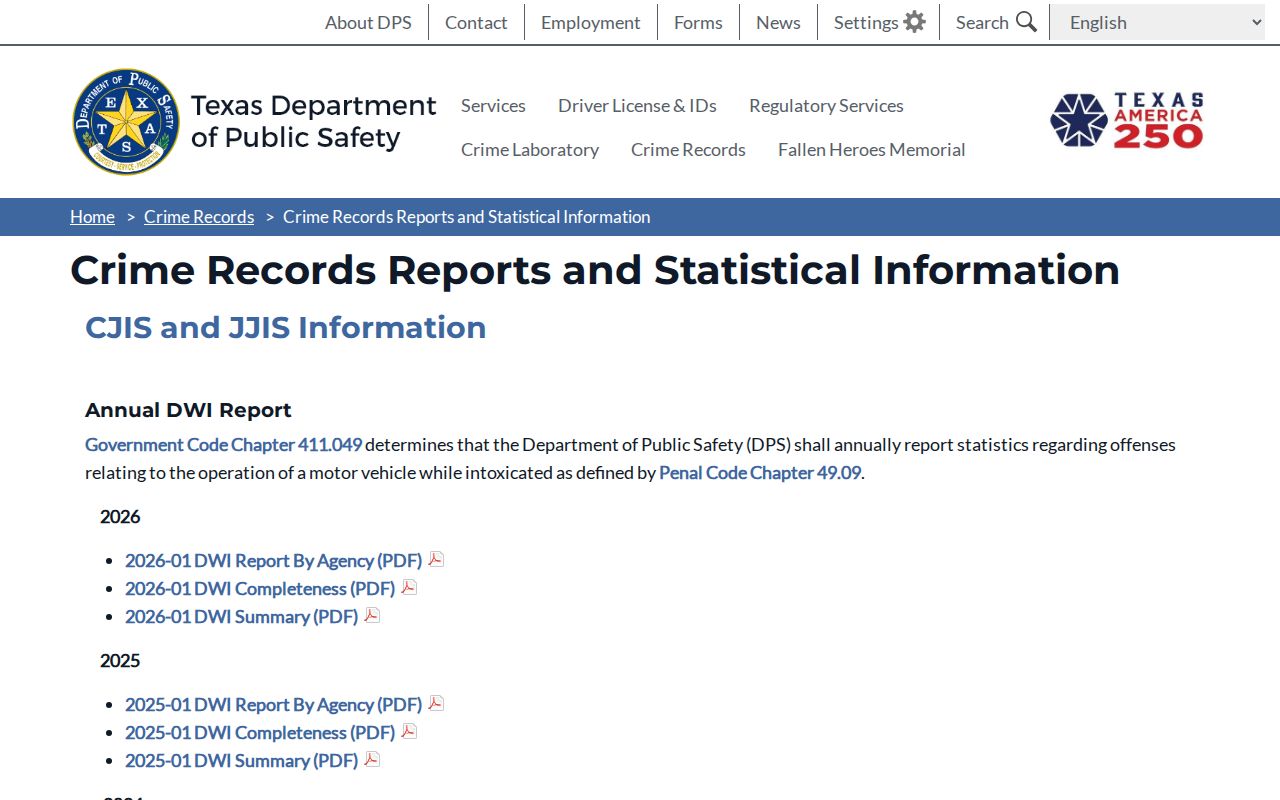
Always state the year and agency attached to a count. Pleasanton PD data should not be blended with Sheriff activity or with Lytle and Poteet. A count also answers a different question than an individual record check: statistics describe reported agency totals, while the custodian file documents a particular incident or case.
No Pleasanton Arrest Database
A missing city arrest search is not a dead end. Request the Pleasanton police report through NextRequest or the department contact, then call ACSO booking or jail records. Move next to the municipal court for a fine-only matter or to the county portal for a higher charge. Use DPS only for the public statewide disposition slice. This fallback order follows how Pleasanton records are actually divided.
If a result appears wrong, gather the city report, booking identifiers, and certified court outcome before contacting the holder that made the error. For one's own statewide history, DPS provides a fingerprint-based personal review and challenge route. A dismissal alone does not guarantee expunction under Chapter 55A, and deferred adjudication may point instead to an order of nondisclosure.
Pleasanton Record Access Rules
City police records generally enter the Texas Public Information Act process, while ordinary court case files are requested from the clerk under the rules governing court records. Public release can omit Social Security numbers, financial identifiers, protected victim and minor information, and sealed or expunged material. Active-investigation exceptions may also limit a police report. Ask for any segregable public portion instead of assuming the whole file is open or closed.
Key Statutes:
Texas Government Code Chapter 552 generally provides access to agency-held public information and sets request procedures.
Texas Government Code Section 411.135 authorizes public access to specified conviction and deferred-adjudication information held by DPS.
Texas Code of Criminal Procedure Chapter 55A governs eligibility, notice, and effect for expunction.
Public access does not turn an allegation into a conviction. Read the disposition in the final court record, and use fingerprints when identity certainty is required for personal review.